Emergency AI for Emergency CT: Stroke, Pulmonary Embolism, Aortic Dissection and Cervical Spine Fractures
Stroke, pulmonary embolism, aortic dissection, cervical spine fracture: on these CT scans, the time between acquisition and reading matters. CINA tools analyze each qualifying scan as soon as it is acquired, flag suspected cases and move them up the worklist, so the radiologist reads them first.
The critical cases, read first.
CINA-ICH
The first scan is always a non-contrast CT. Before anything else is decided, hemorrhage has to be ruled out. CINA-ICH flags it before the radiologist opens the case.
CINA-LVO
Once hemorrhage is excluded, the CTA looks for the occlusion. CINA-LVO flags it immediately, so the case is read first.
CINA-ASPECTS
If an occlusion is confirmed, that same NCCT is scored for ASPECTS, a key input for treatment decisions. CINA-ASPECTS returns it automatically.
CINA-PE
A dedicated CTPA is ordered when PE is suspected. CINA-PE flags it automatically and notifies the radiologist within a mean of one minute, before interpretation begins.
CINA-AD
Type A or Type B decides emergency surgery versus medical management. CINA-AD flags suspected dissection within seconds, and delivers the Stanford classification outside the United States.
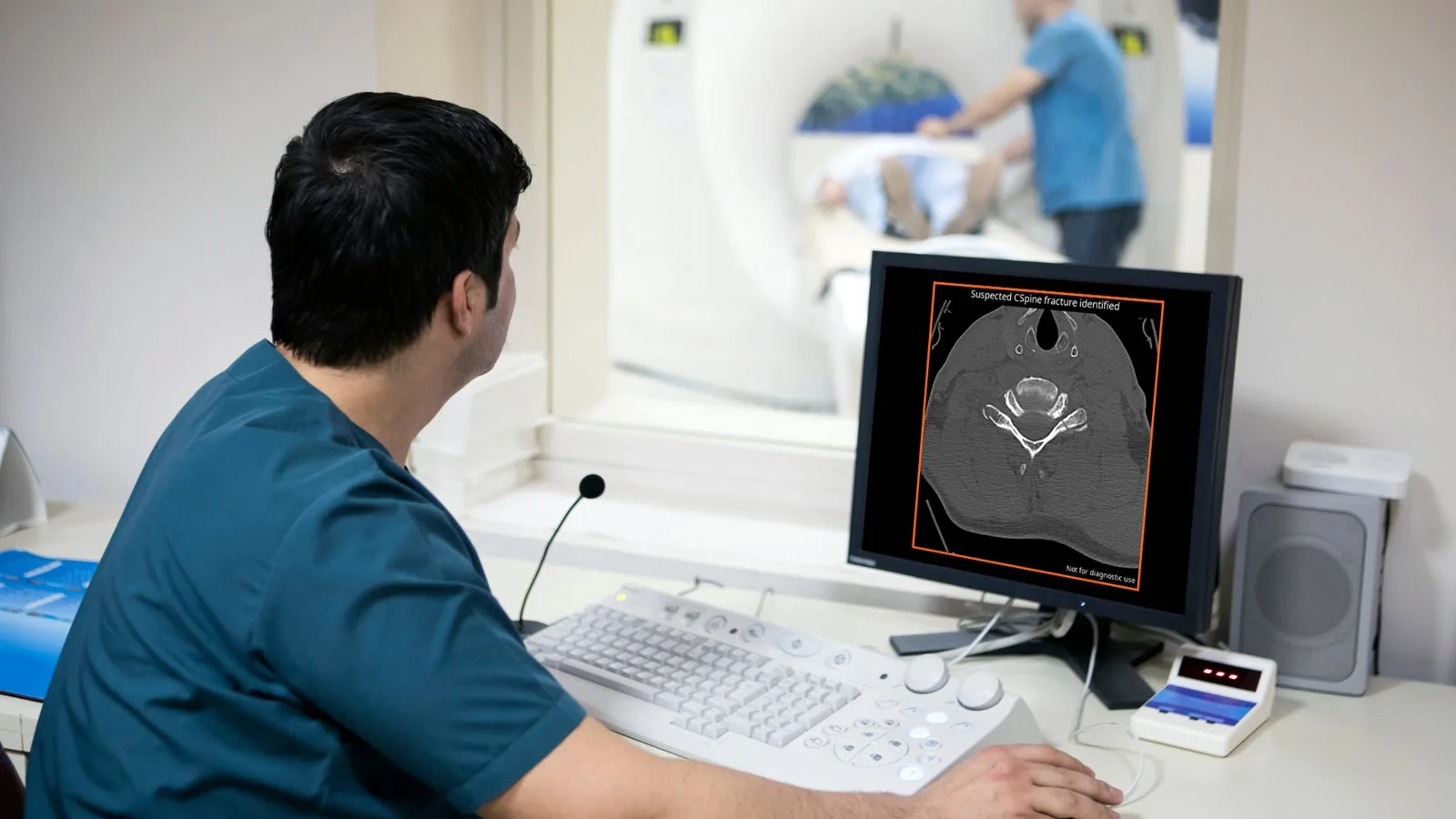
CINA-CSpine
In a trauma workup, the cervical CT is already routine. CINA-CSpine flags suspected fractures from C1 to C7 as soon as the scan lands, pushing the case to the top of the worklist.
Validated in clinical practice.
Four-hospital US health system: time-to-consult and in-hospital mortality measured before and after CINA-PE.
In a real-world emergency stroke workflow, average radiologist reading time was 6.5x faster, without loss of accuracy.
Multi-reader, multi-case study: effect of AI-assisted notification on the time from scan acquisition to a completed clinical assessment.
Your questions, answered
Which emergency findings do CINA tools cover?
Six CE-marked and FDA-cleared CINA tools cover emergency CT: CINA-ICH (intracranial hemorrhage), CINA-LVO (large vessel occlusion), CINA-ASPECTS (ASPECTS scoring), CINA-PE (pulmonary embolism), CINA-AD (aortic dissection) and CINA-CSpine (cervical spine fracture). Each one runs automatically on its own scan type.
Do I need to deploy all six tools together?
No, each tool deploys independently. You can start with the emergencies your department sees most and add the others on the same infrastructure.
Does this integrate with our existing PACS?
Yes. All six tools integrate via standard DICOM and run automatically on qualifying scans, with no manual trigger and no change to your existing workflow.
Who makes the final call?
The radiologist, always. CINA flags and prioritizes suspected cases so they reach the right reader faster. Every case is still reviewed, interpreted and confirmed by a radiologist.
Explore the other AI suites.
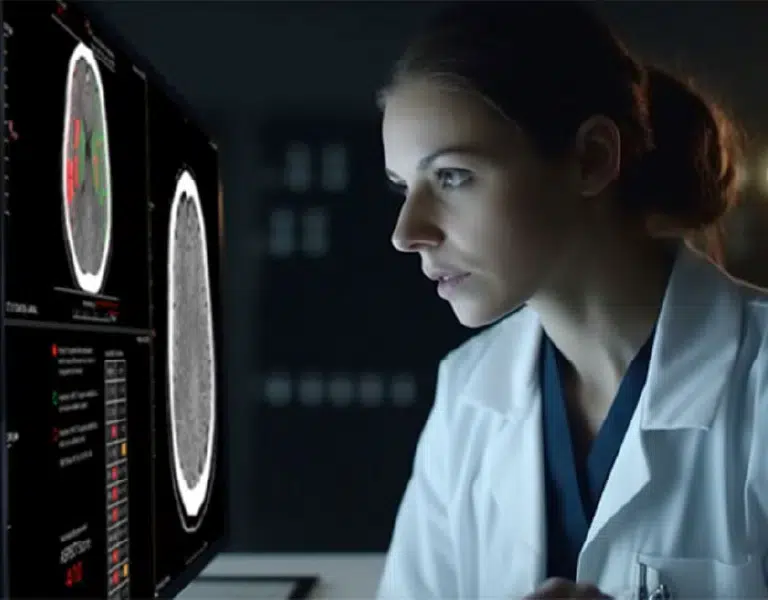
Stroke and head CT
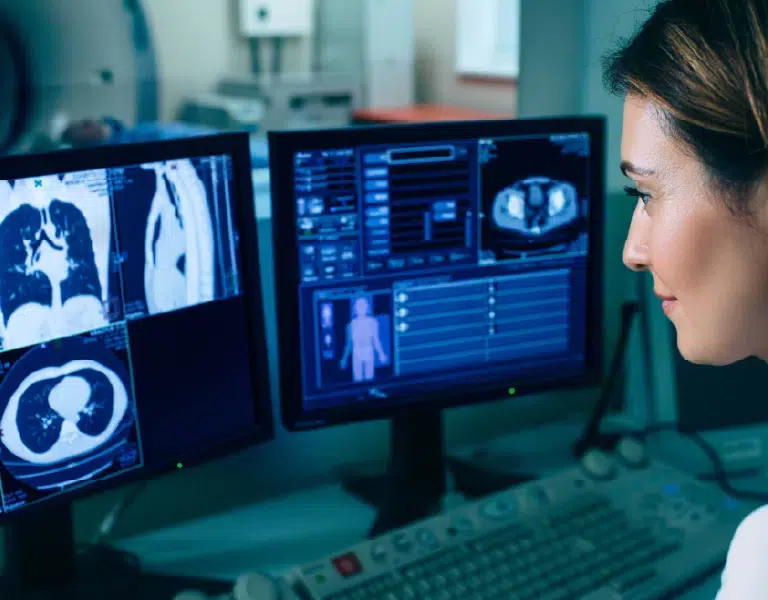
Pulmonary embolism and aortic dissection
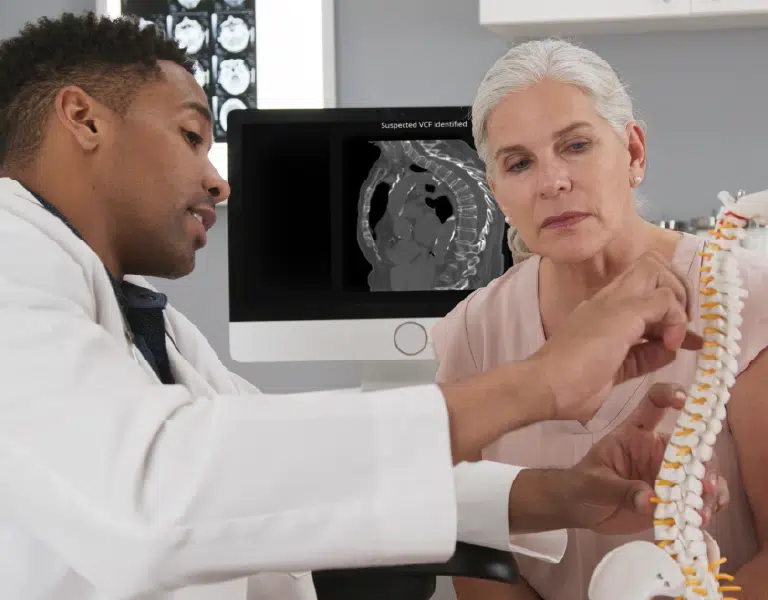
Cervical and vertebral fractures
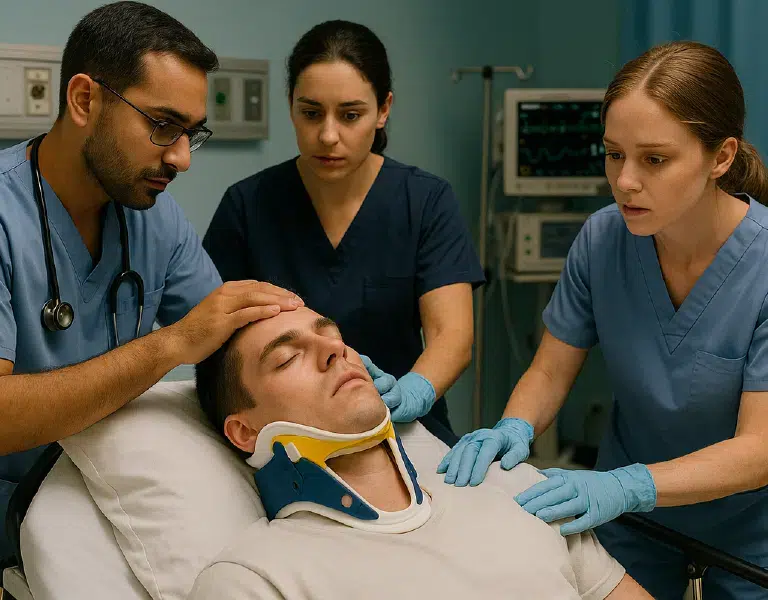
Head and cervical spine in trauma
Findings on scans ordered for something else